Many people question whether nail polish benefits or harms nails. Some think it offers protection, while others feel it makes nails weaker. The reality is a bit more complex.
At our salon, we guide clients through understanding the effects of polish on nail health. Here’s what you should know about its protective qualities and the best way to use it.
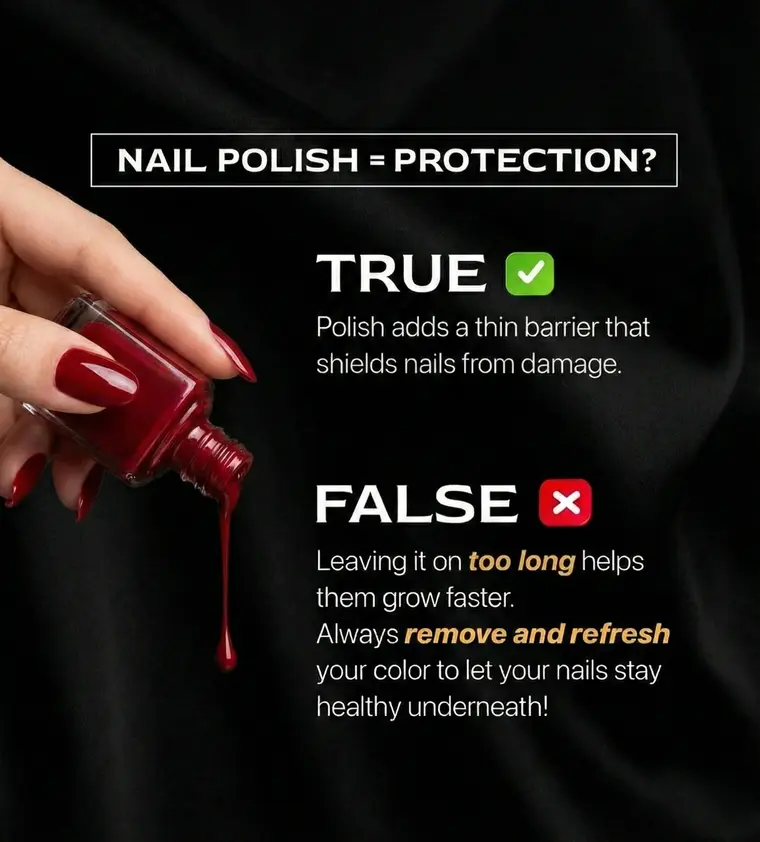
True: Nail Polish Provides a Protective Layer
Nail polish forms a thin shield that, when applied properly, helps defend nails from daily wear, minor injuries, and moisture loss.
1. Forms a Shield Over Nails
The polish creates a hard surface over the nail, safeguarding it from scratches, slight knocks, and routine friction from activities like typing or cleaning.
2. Reduces Water Absorption
Nails tend to soak up water, leading to expansion and eventual weakening. Polish acts as a seal to limit this, keeping nails more stable.
3. Minimizes Breakage
With polish, nails are less apt to snag or split. The smooth surface allows them to glide across fabrics or objects without catching.
4. Retains Natural Moisture
Polish helps preserve the nail’s natural oils, ensuring nails remain flexible and less likely to peel or crack.
False: Keeping Polish on Longer Helps Growth
Many believe that keeping polish on for extended periods encourages growth and strength. This is incorrect.
1. Traps Moisture and Germs
Worn polish can hold moisture beneath, creating conditions that promote bacterial or fungal growth, discoloration, and weakened nails.
2. Hides Nail Problems
If polish isn’t refreshed, underlying issues like yellowing or infection might go unnoticed.
3. Increases Staining Risk
Dark shades, especially without a base coat, may discolor nails. The longer they remain, the more intense the staining.
4. Leads to Fragile Nails
Although polish gives short-term protection, leaving it on for weeks without breaks can cause brittleness. Nails need occasional recovery from polish chemicals.
Best Practices for Nail Polish Protection
To enjoy the benefits of polish without the drawbacks, follow these practices:
1. Use a Base Coat Every Time
A base coat prevents stains and creates an even surface for color. It also improves polish longevity and finish.
2. Refresh Regularly
Swap out polish every 7–14 days to avoid moisture buildup and monitor nail health. Gel polish should be removed after 2–3 weeks to prevent damage.
3. Allow Breathers
Take occasional breaks from polish so nails can recover. Moisturize your nails during these times with oils and creams.
4. Remove Polish Carefully
Opt for acetone-free remover and never peel or force polish off. For gel, soak off properly or seek professional help to avoid harming your nails.
5. Hydrate Nails and Cuticles
Polish doesn’t eliminate the need for hydration. Apply cuticle oil daily to keep nails strong and flexible.
Warning Signs of Nail Harm
Be aware if you see:
- Yellowing or discoloration
- Dryness, brittleness, or thinning
- Increasing white spots or ridges
- Peeling or flaking
- More frequent breakage
If these occur, take a break from polish, prioritize hydration, and avoid harsh chemicals until your nails recover.
Take Care of Your Nails
With the right approach, nail polish protects your nails and helps them look their best. Regularly update your polish and let your nails breathe occasionally for ongoing health.
📞 Call to book: (615) 431-0122
📍 Location: 298 Indian Lake Blvd, Hendersonville, TN 37075
For optimal nail health and protection, choose professional care with VSL Nail Spa II at Indian Lake.